
Honda Paint Code Guide: How to Find the Right Color by VIN
Search Window Sticker
Table of Contents
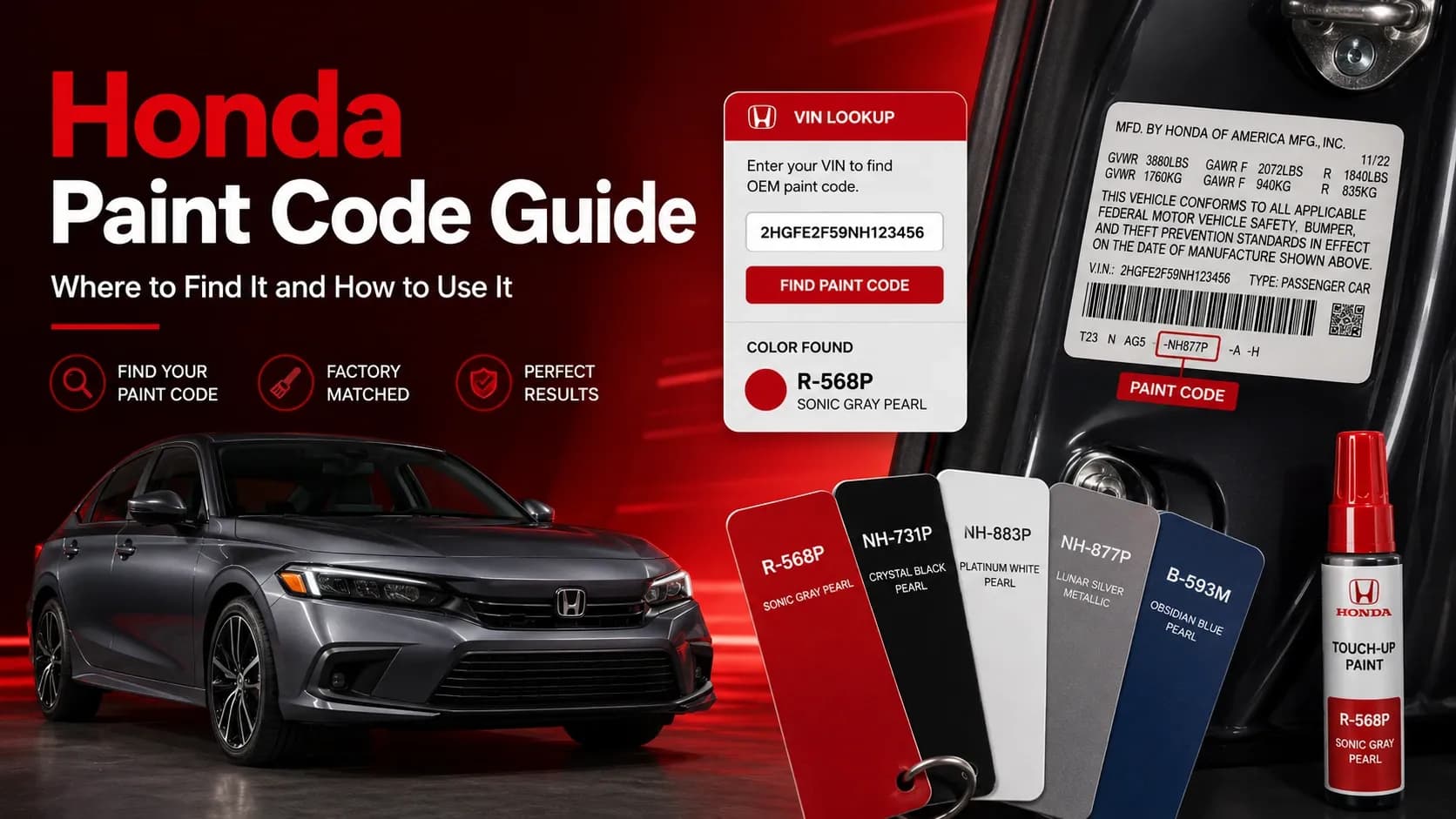
Trying to match the paint on a Honda? Grab the VIN first, then back it up with the paint code on the factory label or a trusted color record. A Honda paint code by VIN lookup can help verify the original exterior color, interior color, and factory color details connected to the vehicle.
That’s useful if you’re fixing rock chips, checking repaint work, selling a used Honda, or ordering touch-up paint that won’t look “almost right” in the worst possible way. For a quick check, run the VIN through a Honda paint code by VIN lookup and compare the result with the label on the vehicle.
Key Takeaways
 A Honda VIN can help confirm the original factory color, but the exact paint code should be checked against the vehicle label when possible.
- The Honda factory paint code is usually found on a label around the door jamb, under the hood, trunk area, or other factory sticker locations.
- Paint code, color name, and paint finish are related, but they are not the same thing.
First, What Is a Honda Paint Code?
A Honda paint code is Honda’s short factory reference for the paint formula used on a specific vehicle color. The color name is what most owners remember, but the code is what a paint counter, body shop, or touch-up paint seller will usually ask for.
Take Crystal Black Pearl. That’s the color name you might see on a listing or window sticker. The code is often written as Honda paint code NH731P (Crystal Black Pearl), and some sources may show it with a hyphen as NH-731P.
That code matters because “black” is not just black. Ask any body shop. A black Honda Civic, Accord, CR-V, or Ridgeline may have pearl, metallic, clearcoat, or slight tone differences that are hard to see until fresh paint dries next to an older panel.
And that’s when the regret kicks in.
Why the Paint Code Matters More Than the Color Name
A color name helps humans understand the shade. A paint code helps match the formula.
It sounds like a tiny detail until you’re paying for paint, trying to fix a scratch, or explaining a color mismatch to a buyer.
When You’re Ordering Touch-Up Paint
A Honda touch up paint code helps you avoid grabbing a near-match that looks fine in the bottle but wrong on the car. It matters for small chips, scratches, bumper scuffs, and door-edge marks.
If you only search “white Honda paint,” you may end up with the wrong white. Honda has used pearl white, platinum white, taffeta white, championship white, and other shades over the years.
To Check Repaint or Repair Work
Used-car buyers should care about paint codes too. If the factory color does not match the current body color, that does not automatically mean trouble. The vehicle may have been wrapped, repainted, or repaired.
Still, it gives you a question worth asking.
To Help a Body Shop Match Panels
Body shops do not work from vibes. They need the code, the finish, and sometimes the variant. A paint code helps them find the right formula before blending the color into nearby panels.
To Make a Listing More Accurate
For sellers and car flippers, exact color details help. “Modern Steel Metallic” sounds better and more precise than “gray.” Buyers notice that kind of detail, especially when comparing similar Hondas.
How to Find Honda Paint Code
If you’re wondering how to find Honda paint code, don’t start by guessing from the body color. Start with the vehicle itself.
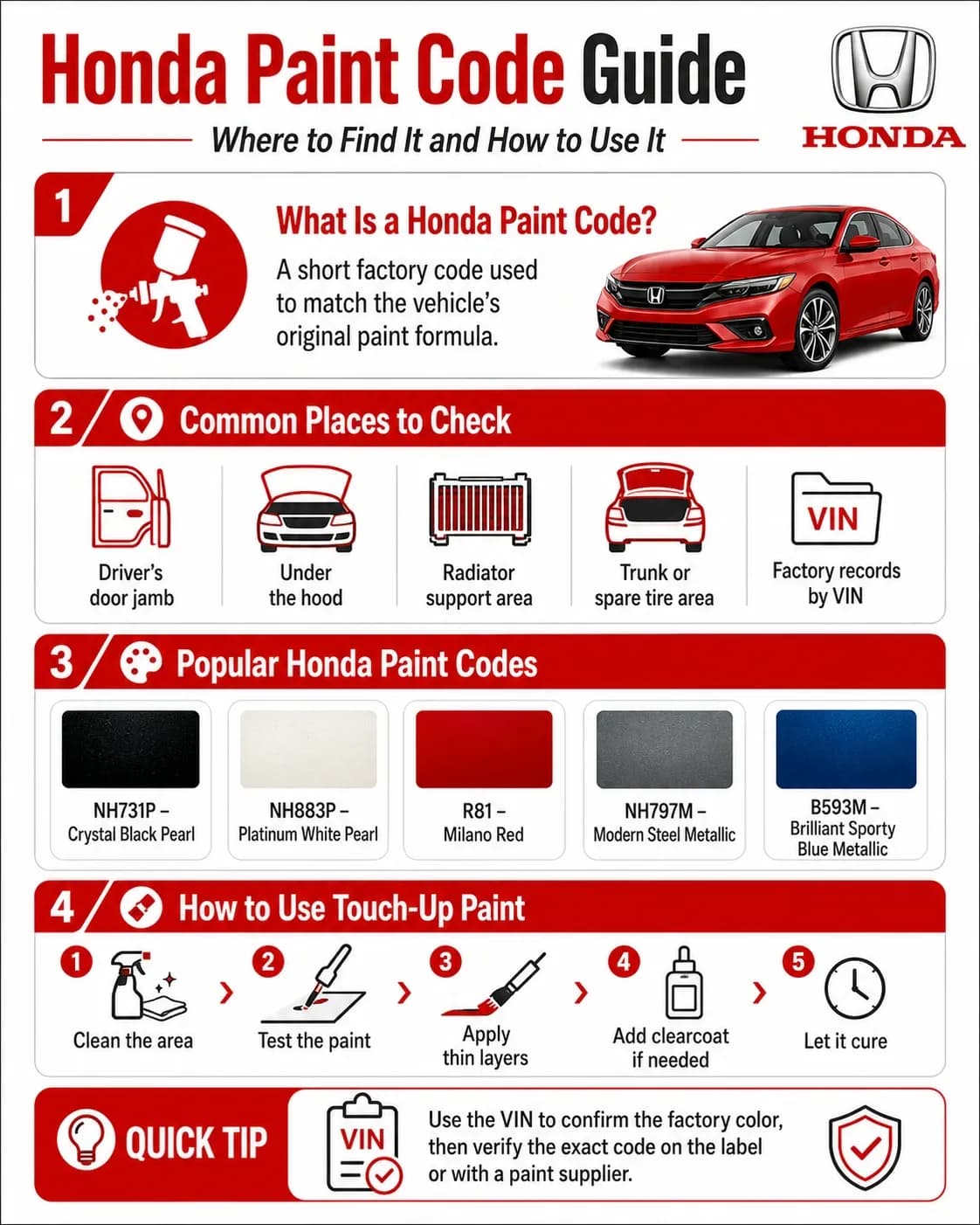
1. Check the Driver’s Door Jamb
This is one of the first places to look. Open the driver’s door and inspect the door jamb, door frame, or door edge for a factory label.
The label may include the VIN, manufacturing details, and color-related information.
2. Look Under the Hood
Some Honda labels may be found near the firewall, radiator support area, inner fender, or underside of the hood.
If the door label is faded, missing, or damaged, this area is worth checking.
3. Check the Trunk or Spare Tire Area
Some vehicles may have identification labels near the trunk floor, spare tire area, or inside trim panels.
This is less fun if the trunk is full of old gym bags and mystery cables, but it’s still worth a quick look.
4. Review Factory Records by VIN
If the label is missing or the car has had paintwork, a VIN-based record can help you confirm the original exterior color and related factory details. It also helps when the seller only remembers the color name.
5. Have a Dealer or Paint Supplier Double-Check It
A Honda dealer or trusted automotive paint supplier may help confirm the code using the VIN or vehicle label. For serious repair work, this extra check can save headaches.
Where Is Honda Paint Code Located?
So, where is Honda paint code located? The most common answer is around the driver’s side door jamb, but it depends on model, year, and market.
Check these locations first:
- Driver’s side door jamb
- Driver’s side door frame
- Door edge label
- Under the hood
- Radiator support area
- Firewall area
- Strut tower area
- Trunk or spare tire area
- Factory documents or dealer records
If you own a Honda Civic, start with the door jamb. A Honda Civic paint code may appear on a factory sticker near the driver’s side door area, depending on the year and trim.
A Few Honda Paint Codes You Might Run Into
Honda paint codes are usually short mixes of letters and numbers. Some include a suffix that hints at the finish, and depending on the source, the same code may appear with or without a hyphen.
NH731P: Crystal Black Pearl
Honda paint code NH731P (Crystal Black Pearl) is a black pearl finish found on many Honda vehicles. You may also see it written as NH-731P.
This is not the same as flat black. A pearl finish can change a little in sunlight, so the match needs to be checked carefully.
NH883P: Platinum White Pearl
Honda paint code NH883P (Platinum White Pearl) is a white pearl shade. Pearl whites can be fussy because the base coat and pearl layer both affect the final look.
The wrong touch-up pen can make the repair more noticeable than the original chip.
NH797M: Modern Steel Metallic
Honda paint code NH797M (Modern Steel Metallic) is a gray metallic finish. With metallic paint, the flake pattern and spray angle can change how the color lands on the panel.
B593M: Brilliant Sporty Blue Metallic
Honda paint code B593M (Brilliant Sporty Blue Metallic) is a blue metallic finish. Like many metallic colors, it can look different in shade, direct sun, or bright showroom lighting.
Paint Code vs Color Name: Don’t Mix Them Up
A Honda color name and paint code work together, but they do different jobs.
The color name is the friendly version. It’s what you see on a window sticker, listing, or sales description.
The paint code is the technical reference. It tells the paint system which formula to use.
For example:
Color name: Crystal Black Pearl
Paint code: NH-731P or NH731P
That small code is what keeps a touch-up job from looking like a mismatched patch on a clean panel.
How to Use Honda Touch Up Paint
If you’re looking up how to use Honda touch up paint, keep the job honest. Touch-up paint can hide small chips and light scratches, but it will not make deep damage vanish.
- 1
Clean the Area First
Wash the area and remove dirt, wax, or grease. Paint does not stick well to grime, even when the color is perfect. A clean surface gives the touch-up paint a better chance to sit properly. - 2
Test the Paint Before Applying
Try the paint on a hidden spot or a sample card if you can. It is better to catch a color problem there than on the middle of a door. This is especially important for pearl and metallic finishes. - 3
Apply Thin Layers
Do not glob it on. Use thin coats and let each layer dry. Tiny paint layers look better than one thick blob that catches your eye every time you walk past the car. - 4
Add Clearcoat If Needed
Many Honda colors use a clearcoat finish. If the repair system includes clearcoat, apply it as directed after the color coat dries. - 5
Let It Cure
Give the paint time to cure before washing, polishing, or waxing the area. Rushing this step can ruin the finish.
Who Benefits from a Paint Code by VIN Lookup?
Repairs
Matching Honda paint code is not always as simple as ordering the code and brushing it on. Paint changes with age, sunlight, weather, polishing, and previous repairs.
1. Factory Code Gets You Close
The factory code gives the correct formula, but the car’s current paint may have aged. A 10-year-old hood may not match a fresh paint sample perfectly.
2. Metallic and Pearl Paint Need Care
Metallic and pearl finishes can shift based on spray technique and light angle. This is why larger repairs are better handled by a body shop.
3. Panel Blending May Be Needed
For bigger repairs, painters may blend the new paint into nearby panels. This helps avoid a hard color difference between old and new paint.
Buyers and Flippers
Paint code checks are not only for owners fixing scratches. They also help buyers and car flippers spot details in used Hondas.
1. Check If the Color Matches Factory Records
If the VIN lookup says the Honda was originally Crystal Black Pearl, but the vehicle is now red, ask why. It may be a repaint, wrap, or swapped panel.
2. Look for Panel Differences
Check the bumpers, doors, hood, roof, and quarter panels in daylight. Slight color differences may point to past paintwork.
3. Compare the Paint Code With the Seller’s Claim
If the seller says “original paint,” the code and body color should support that story. If not, keep asking questions.
Final Word: Find the Code Before You Buy the Paint
A Honda paint code by VIN lookup can help you confirm original factory color details, but the best approach is to check both the VIN data and the vehicle label. The VIN helps point you in the right direction. The label or paint supplier helps confirm the exact code.
That matters whether you’re fixing a Civic door chip, checking a used CR-V before buying, or preparing a cleaner listing for resale.
Before ordering paint or trusting a color claim, verify the Honda factory paint code with a Honda paint color lookup by VIN and compare it with the vehicle label.