
Check the Honda VIN and Get the Report
Over a million used Hondas are sold in the USA annually. That is why it is crucial to run the Honda VIN check and get the vehicle history report to see the car’s specifications and records, like accidents, auctions, maintenance, and odometer readings.
What is a Honda VIN Check?
A Honda VIN check helps you identify the car by using the Vehicle Identification Number. A VIN is a unique identifier for each vehicle—even Hondas from the same year, model, and trim will always have different VINs.
By checking the VIN, you get detailed information about the vehicle, like the country of origin, engine code, and the vehicle’s serial number. If you're buying a used Honda, it's highly recommended to check the VIN and obtain the vehicle report to ensure you're not purchasing one with hidden issues, such as unresolved liens.
Honda VIN Number Structure Explained
A Honda VIN consists of 17 characters that provide essential details about the vehicle. The structure is divided into three sections: the World Manufacturer Identifier (WMI), Vehicle Descriptor Section (VDS), and Vehicle Identifier Section (VIS). Each contains specific information about the vehicle’s make, model, engine type, and production year.
WMI (World Manufacturer Identifier)
The first three characters represent Honda’s manufacturing country and company.
VDS (Vehicle Descriptor Section)
Characters 4-8 provide information about the vehicle's model, engine type, body style, and trim.
VIS (Vehicle Identifier Section)
The last 9 characters identify the specific vehicle’s serial number, assembly plant, and model year.
Where to Find the VIN on a Honda?
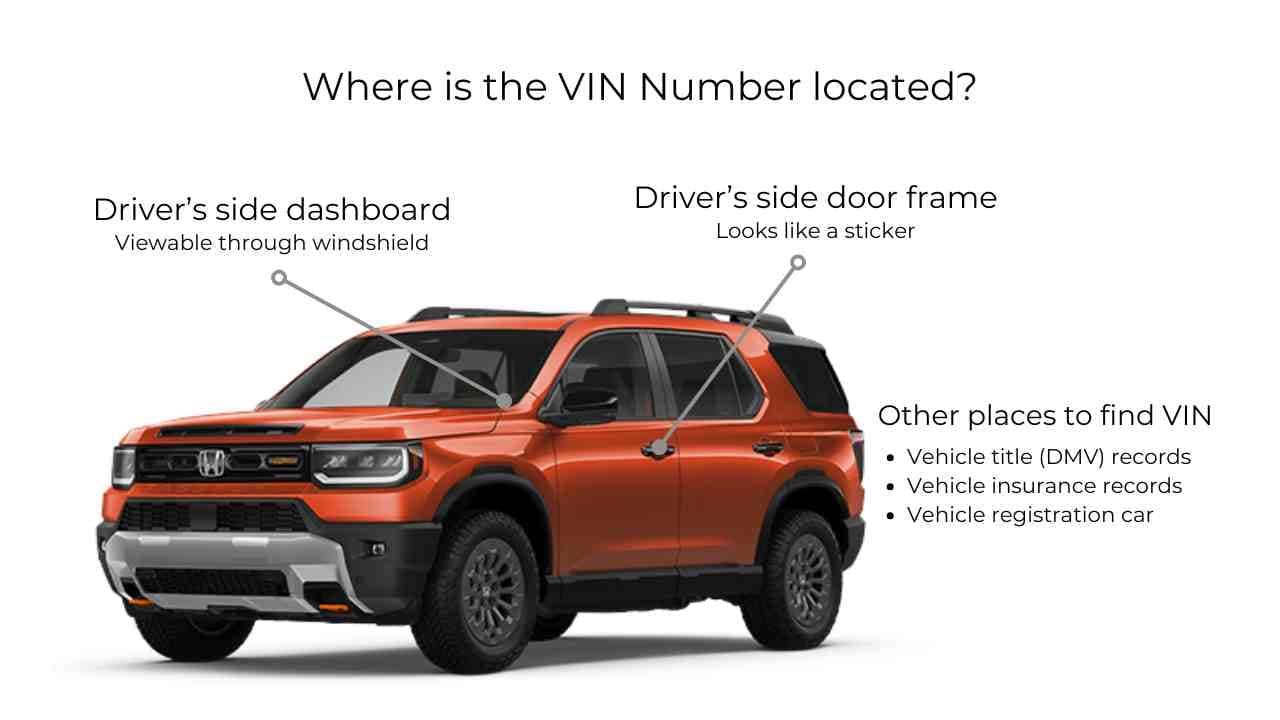
To find the VIN on a Honda, you can examine a few locations on the body and the paperwork, like registration cards or the bill of sale.
Here’s where you can find the VIN:
- Sticker or plate in the driver's door jamb
- Vehicle title/registration or insurance documents
- Stamped on the engine firewall, frame, or near the spare tyre well in the trunk
- Driver's side dashboard (viewable through the windshield)
Why Do You Need to Check the Honda VIN?
Checking the Honda’s VIN helps you to ensure that the car you are buying is in good condition andcondition, matches your needs and budget, and itand also helps you close the deal faster. Whether you are a seller or buyer, a check of the VIN is crucial. Here’s why:
Buyers:
As a buyer, checking the VIN and getting the full vehicle history report helps you to examine the car’s condition better.
Check Title Status
Confirm whether the car has a clean title or was previously marked as salvage, rebuilt, or lemon.
Verify Odometer Accuracy
Compare mileage records from different sources to spot rollbacks or inconsistent readings.
Examine Vehicle Condition
See records of accidents, damage, or major repairs that may not be visible during inspection.
Sellers:
If you are a seller, providing a vehicle history report helps you to get the buyer’s trust and set the selling price better according to its actual condition and MSRP.
Understand the Product Better
The vehicle history report helps sellers clearly explain the car’s specifications, condition, and history.
Build Buyer Trust
Sharing verified records shows transparency and reduces buyer doubts during negotiations.
Set the Right Price
Use the vehicle’s history and condition to support fair pricing based on real data like MSRP and market value.
The Only Report Built Specifically for Honda Buyers
Buying a used Honda can be risky if you do not do a complete inspection to see if it matches your needs and preferences. Here’s a comparison between our Honda VIN check service and the other service providers.
| Feature | Carfax | Our Report | AutoCheck |
| Price | $44.99 | $19.99 | $29.99 |
| Single Report | Yes | Yes | Yes |
| Sales Listings with Photos | No | Yes | No |
| Auction Records with Photos | No | Yes | No |
| Market Value Data | Yes | Yes | Yes |
| Vehicle Specifications | Limited | Complete | Limited |
| Window Sticker Access | No | Yes | No |
| Classic VIN Decoding | No | Yes | No |
| Maintenance Guidance | Yes | Yes | No |
| Ownership History | Yes | Yes | Yes |
| Accident History | Yes | Yes | Yes |
| Damage Check | Yes | Yes | Yes |
| Branded Title Check | Yes | Yes | Yes |
| Salvage Title Check | Yes | Yes | Yes |
| Ownership History Map | No | Yes | No |
| Recall Information | Yes | Yes | Yes |
| Support for Heavy-Duty Trucks, ATVs, Trailers, Motorcycles | No | Yes | No |
| Mobile/Desktop App | No | Yes | No |
← Scroll horizontally to see more →
How to Get a Honda VIN Check
To get a Honda VIN Check, all you need to have is the Vehicle Identification Number (VIN). Once you have the VIN, follow these steps to get it done easily:
Step 1: Locate the VIN
First of all, you will need to find the VIN first. To find the VIN, you can check on the vehicle’s driver’s doorjamb or on the engine block. On the other hand, if you cannot find the VIN on the vehicle’s part, you may check on the paperwork, like the bill of sale or registration cards.
Step 2: Fill in the Form
Once you have the VIN, click on the form, then write down the VIN. After that, click on the button to submit the form.
Step 3: Get the Result
Once the process is complete, you'll see the free VIN decoding results, including the vehicle's main specifications, original MSRP, country of origin, and estimated market value. For more details like accident history, recall status, auction records, or maintenance history, you can upgrade to the full vehicle report.
What’s on the Free Honda VIN Decoder
Running a free VIN check is the fastest way to get the basic information about the vehicle. By using the free Honda VIN decoder, you will be getting this crucial information:
Car’s Specifications
Check the Honda’s specifications with our free Honda VIN decoder tool. In this section, you can see the car’s detailed specifications, like the engine information, drive type, fuel type, country of origin, and many more.
MSRP
The Manufacturer’s Standard Retail Price is the recommended retail price for the vehicle when it was out from the manufacturer. You can see the vehicle’s MSRP and check if it's worth the price to be purchased.
Market Value
Aside from giving you the MSRP information, you can see the car’s market value from different perspectives, like private seller, retail, and trade-ins.
What’s on the Premium Honda Vehicle History Report?
A Honda VIN check helps you see details that aren’t always obvious during a quick look or test drive. It gives you clear information about past events, ownership, and major repairs, so you know what you’re getting before you decide to purchase the car.
Accident History
This part explains how serious each recorded accident was. It helps you understand how those events might affect the car’s long-term durability. You can decide if the vehicle still meets your expectations based on the severity.
Repair Quality Assessment
The report highlights whether body panels, frames, or major systems were restored using approved methods. This section also highlights whether the repair shop is certified to perform the fixing, and helps you assess the vehicle’s
Airbag Deployment Records
Airbag deployment often means the vehicle experienced a strong collision. Knowing this helps you understand the real extent of past events. It also ensures you check that replacement airbags were installed correctly.
Ownership and Title History
A clear ownership timeline helps you understand how the Honda was used over the years. You’ll see how long each owner kept the car and whether the usage pattern suggests careful handling or heavy wear. This reduces surprises when you’re evaluating the vehicle’s overall condition. It also supports a smoother buying experience.
Number of Previous Owners
The report lists every recorded owner since the car was bought for the first time. Fewer owners sometimes mean more consistent maintenance. More owners aren’t always bad, but it can tell you how often the car changed hands.
Lease vs. Personal Ownership History
Leased cars might have been serviced on schedule, while personal cars can vary depending on the owner’s habits. Both types are fine, but understanding the difference gives you a better idea of how the car was used.
Registration History by State
A vehicle's geographic history is a hidden indicator of its structural health. Our report tracks every state registration to help you identify the risks that might come with, for example: Hondas from Northeastern states (like New York, Ohio, or Michigan) are prone to severe underbody corrosion and "frozen" suspension components due to heavy road salt.
Title Brand Checks (Salvage, Flood, etc.)
This section flags branded titles like "salvage," "flood," "junk," or "rebuilt." These records point to serious past damage that can affect safety and resale value. Make sure you check the vehicle’s title before you purchase.
Salvage
Deemed a total loss by insurance; avoid this one.
Flood
Water damage often leads to serious, long-term issues. Look for any musty smells and rust.
Rebuilt
A salvage vehicle that’s been repaired. The risk remains, even after repairs.
Lemon Law Buyback
The manufacturer bought the vehicle back due to repeated issues.
Maintenance and Service Records
This section brings together service logs tied to the Honda VIN. You’ll see oil changes, part replacements, and major scheduled work. Regular service suggests a well-kept vehicle, while gaps can raise questions about long-term reliability.
Honda Dealership Service History
This part reflects visits to authorised Honda service centres and the type of work done there. You can see the date, location, and what was fixed/maintained or performed.
Scheduled Maintenance Compliance
This includes work like timing belt checks, fluid replacements, and inspections. When a car stays on schedule, it often performs better over time.
Warranty Status and Expiration
The report tells you what’s covered, what isn’t, and when each protection ends. This helps you understand what support you might still have.
Honda Warranty Types
See what kind of warranties still cover the vehicle. See if it's covered by corrosion protection, roadside assistance, manufacturer warranty, and extended warranty.
Warranty Limit
Check the detailed limit of each covering warranty. See the months and how many mileage left for each warranty.
Honda Recalls
This section matches the Honda VIN with any recall notices issued by the manufacturer. If a recall was open, the report shows whether it was completed or even ignored.
Detailed Recall Information
In this section, you will get to see the complete information on all the recalls Honda has ever had. See the date, causes, and the status of the recalls (open/closed).
Market Value and Pricing Data
This section compares past sales, mileage, condition, and features to estimate a realistic value. It’s useful when negotiating or checking if a listing matches the car’s real worth. The numbers here adjust based on trusted market data. It makes choosing the right Honda feel easier and more predictable.
Current Market Value Estimation
This part shows the estimated price range based on similar Honda models for sale. It looks at mileage, condition, and year to give you a balanced figure. It’s great for spotting deals or noticing when a listing seems too high.
Trade-in, retail & private sale records
The report outlines typical prices for trade-in, dealer retail, and private sale. These figures help you understand how sellers value the car in different settings. It also shows you where you might get the best deal.
Sales & Auction History
Understanding past sales gives you a clearer look at how the car moved through the market. Some Hondas appear at auctions before reaching dealerships, and this can affect pricing. Seeing the full timeline helps you understand how the vehicle was handled. It’s a helpful part of building trust in the purchase.
Sales History
This section lists recorded retail sales along with relevant dates and locations. You can track how long the car stayed with each owner and how often it changed hands. This helps you judge demand and stability. It’s a detail that can guide your final choice.
Auction History
If the Honda went through any auctions, you’ll see when and where it happened. Auctions are common, but knowing this tells you how the car entered the resale market. It helps you understand whether dealers or wholesalers handled the vehicle. This extra context makes the whole picture clearer.
How a Buyer Saved Almost $2000
Kiko wanted to purchase a used 2012 Honda Accord from a private seller in California. Before she checked the car’s condition, she decided to run the Honda VIN Check and get the vehicle history report. Here’s what she found on the report.
VIN: 1HGCP2F86CA174785
First Impression
1. Cheaper than other sellers2. Looks good with no dents3. Average mileage records
Critical Findings
1. The vehicle has a branded title2. 5 accident record(s) found.3. 2 Record(s) of damage are found for the vehicle4. 2 specific events reported5. 6 service & repair record(s)6. 1 auction & 1 sales record(s)7. 3 lien or loan record(s)
Outcome
Kiko decided to call it off because the car had been involved in an accident five times and had an unresolved lien/loan record.
Lessons Learnt
Always do thorough research before deciding to purchase a used vehicle.
No need to sign up
Our Honda VIN check gives you details that most other services don’t offer. It’s built to help you learn more about the vehicle without jumping through extra steps or dealing with hidden limits. When you use this tool, you get helpful perks that make the whole process simpler and more complete.
- No account needed
- Actual photos from past auctions
- Less than $25 per report
- A downloadable report that never expires
Check the Other Honda VIN Check Service
What People Asked About Honda VIN Check
Yes, you can check the Honda VIN for free by using the VIN check to get the basic information of the car, such as the specifications and market value. If you’re looking for a complete history report, you’ll usually need a paid service to access those records.
Yes, you absolutely can look up the vehicle’s specifications by using the VIN through an online VIN decoder. You can find the vehicle’s manufacturer, model year, engine type, factory options, and MSRP. If you wish to get the full vehicle history reports that cover accidents, previous owners, and any recalls tied to the vehicle, you can proceed to the premium vehicle report.
Yes, you can check a motorcycle VIN by locating the 17-digit number stamped on the steering neck or frame, then entering it into free online VIN decoders, official manufacturer databases, or paid vehicle history services to find details such as the year, model, specifications, or theft records. For more comprehensive history reports, a paid VIN lookup service may be required.
To check recalls by VIN, locate your 17-digit VIN on the driver’s door jamb or windshield, then visit an official manufacturer recall lookup page or a government vehicle safety website. Enter the VIN to view any open safety or emissions recalls, which are typically repaired at no cost by authorized service centers.
To check recalls by VIN, locate your 17-digit VIN on the driver’s door jamb or windshield, then enter it on the manufacturer’s official recall page or a government vehicle safety website to view any open safety or emissions recalls, which are repaired at no cost by authorized dealers.