
How to Find Honda Factory Options by VIN & Check What Your Honda Really Came With
Search Window Sticker
Table of Contents
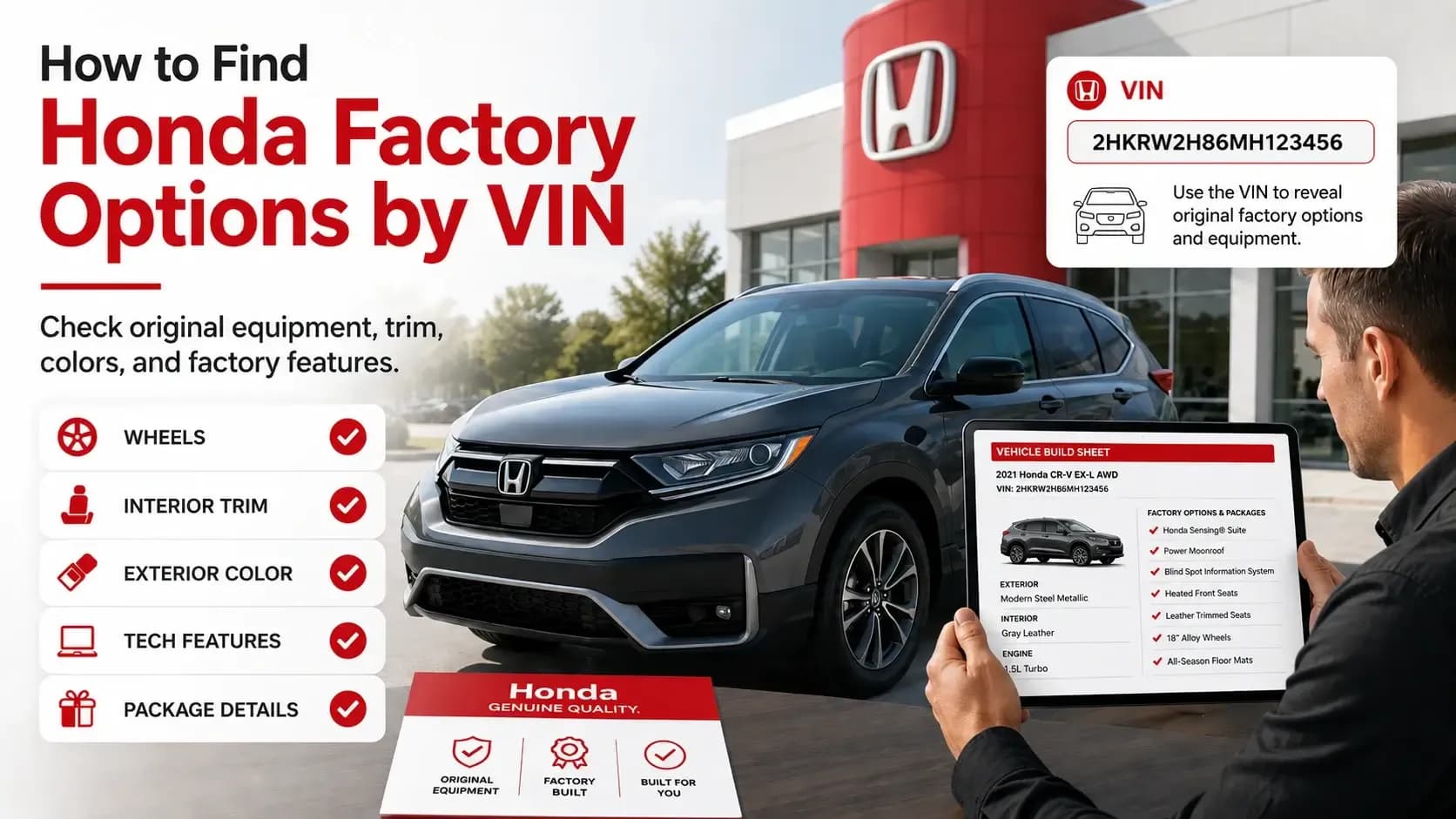
Want to know what a Honda came with from the factory? Use the VIN. A Honda factory options by VIN lookup can help you confirm original equipment, trim details, packages, colors, engine information, and other build details tied to that exact vehicle.
That matters when a listing says “fully loaded,” but the photos only tell half the story. If you already have the VIN, you can check the vehicle’s original equipment through a Honda build sheet by VIN before you buy, sell, or compare it with another Honda.
Key Takeaways
 A Honda VIN can help you check original factory options, not just basic model details.
- Factory options are different from dealer add-ons and aftermarket upgrades.
- Used-car buyers, sellers, and flippers can use factory data to price, compare, and verify a Honda with more confidence.
First, What Are Honda Factory Options?
Honda factory options are features, packages, or equipment added when the vehicle was built or prepared for sale as a new car. They may include appearance items, comfort features, technology packages, wheel upgrades, interior trim, drivetrain details, or safety equipment.
Here’s the thing: used-car listings often blur the line between factory equipment, dealer accessories, and aftermarket parts.
A seller may say the Honda has “premium wheels,” but were they factory wheels? Dealer-installed accessories? Something added by a previous owner? Same with roof rails, cargo trays, upgraded audio, towing accessories, and even some appearance packages.
That small difference can affect value.
Factory information gives you a cleaner starting point. It helps you separate what Honda originally built into the vehicle from what someone added later.
Why Should You Check Honda Factory Options by VIN?
You do not need to be a mechanic to care about factory options. You just need to care about paying the right price.
Two Hondas can share the same model year and body style but feel very different once you check the equipment. A used Accord with leather, upgraded audio, and advanced driver-assist features may not sit in the same price lane as a base model. Same body. Different story.
To Verify the Seller’s Claims
A listing may say the Honda has a certain trim or package. The VIN can help you check whether the factory details support that claim.
That does not mean every seller is trying to fool you. Sometimes people guess. Sometimes they copy another listing. Sometimes the dealer feed fills in the wrong trim.
Still, you should verify before you trust it.
To Compare Similar Hondas
This is where factory options become useful. Imagine two used Honda Pilots with similar mileage. One has better factory equipment, a higher trim, or a more desirable color combination.
Photos may not show the difference right away. Factory data can.
To Understand Original Value
Factory options can help explain original pricing. A higher original MSRP may point to a better-equipped Honda or factory-added features that still matter to buyers.
Original value is not current market value, but it gives you context. And context helps when the seller’s asking price feels a little ambitious.
To Build a Better Listing
For sellers and car flippers, factory option details can make a listing stronger. Buyers like proof. They like specifics.
“Factory leather seating, original exterior color, and premium audio shown by VIN” sounds much better than “loaded Honda, must see.”
How to Find Honda Factory Options by VIN
Finding Honda options by VIN is mostly about using the right source and checking the right details. The process is simple, but accuracy matters.
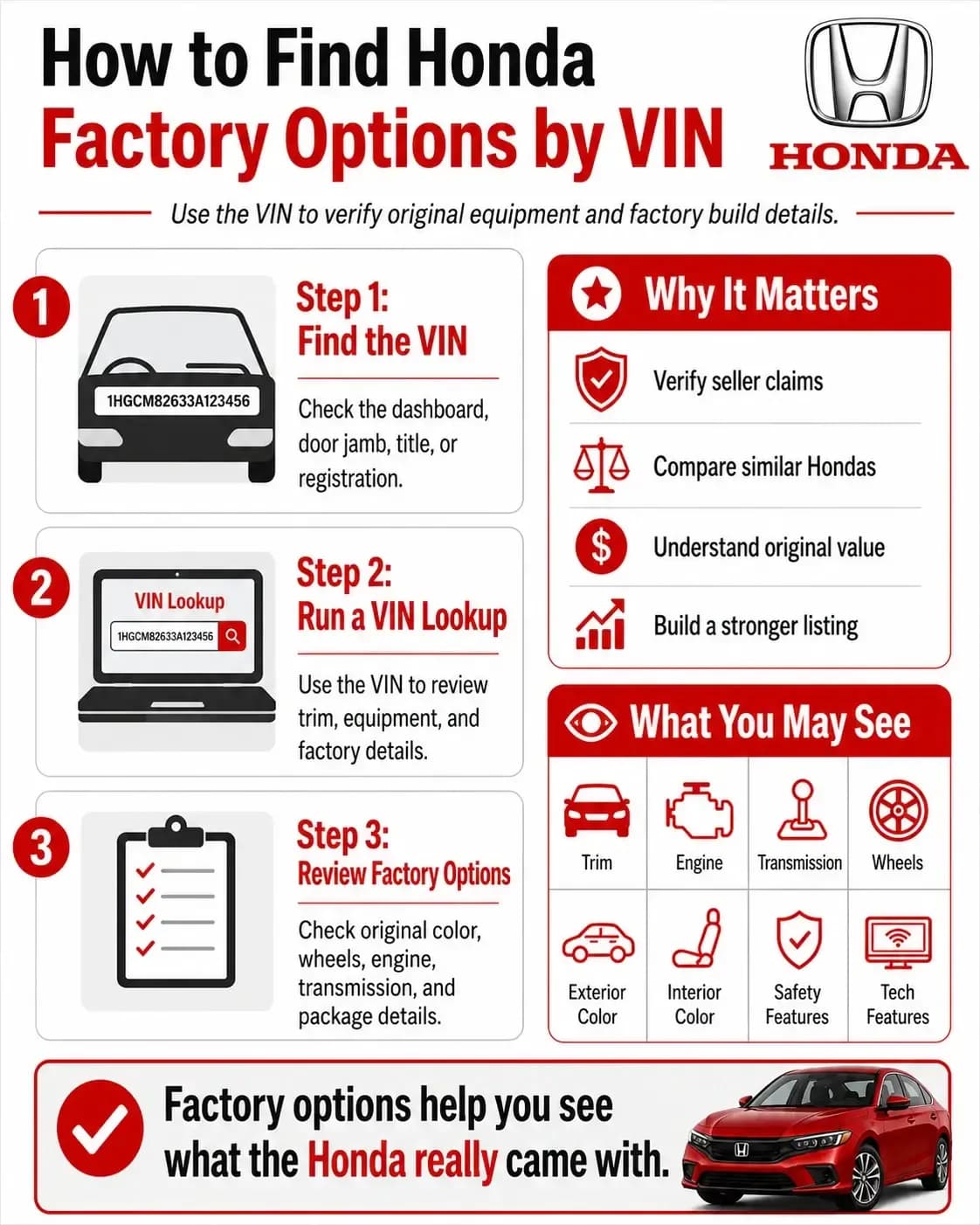
- 1
Find the Honda VIN
Start with the 17-character VIN. You can usually find it on the driver’s side dashboard near the windshield, the driver’s side door jamb, the title, registration, insurance card, or service records. Do not guess from memory. VIN characters are easy to misread, especially from a photo. - 2
Enter the VIN Into a Build Sheet Lookup
A Honda build sheet by VIN can help show the original build details connected to that vehicle. Depending on the available data, it may include trim, standard equipment, factory-installed options, color, engine, transmission, drivetrain, wheels, and other specifications. This is the part where the vehicle starts to feel less like a mystery and more like a file with receipts. - 3
Check the Preview Details
Before you trust the result, check whether the year, make, model, and trim match the Honda you are researching. If the VIN is for a 2021 Honda CR-V but the preview shows something else, stop. Recheck the VIN. A wrong character can take you down the wrong road fast. - 4
Review the Factory Equipment
Once the VIN matches, review the equipment list. Look for the features that affect price and buyer interest: trim, seating, wheels, infotainment, safety systems, exterior color, interior color, drivetrain, and package details. Do not skim too quickly. The valuable details are often hiding in plain sight.
What Factory Options Can a Honda VIN Show?
A VIN-based lookup can show different levels of detail depending on the vehicle and available records. Still, these are the items buyers and sellers usually care about most.
Trim and Model Details
Trim matters because it shapes the vehicle’s equipment level. A Honda Civic LX, EX, Sport, Touring, or Si can have very different features.
The VIN can help confirm whether the trim in the listing matches the vehicle.
Engine and Transmission
Engine and transmission details help confirm the mechanical setup. This is useful for buyers, but also for parts research, resale descriptions, and service planning.
A clean listing should not be fuzzy about the engine.
Factory-Installed Options
These are the original options or packages connected to the vehicle. They may include appearance features, tech packages, wheel choices, seating upgrades, and convenience features.
For flippers, this is gold. Factory options give you better talking points.
Exterior and Interior Color
Original color details can help confirm whether the Honda still matches its factory record. This is useful for paint checks, resale listings, touch-up paint research, and spotting possible repaint clues.
A car can look “silver” in a photo, but Honda color names are more specific than that.
Wheels, Tires, and Appearance Items
Wheels can change the whole feel of a Honda. Some factory wheels are more desirable than others, especially on Sport, Touring, or special appearance trims.
If the wheels do not match the factory record, that does not always mean trouble. It may just mean someone changed them. But you should know.
Safety and Technology Features
Many Honda buyers care about safety systems, infotainment features, cameras, sensors, driver-assist tech, and connectivity. Factory data can help confirm what the vehicle originally included.
This matters because sellers sometimes overstate tech features. Not always on purpose. But it happens.
Factory Options vs Dealer Add-Ons vs Aftermarket Parts
This is where things get a little messy, and honestly, it is worth understanding.
A Honda may have factory options, dealer accessories, and aftermarket upgrades all sitting on the same vehicle. To a buyer, they may all look like “features.” To pricing and verification, they are not the same.
Factory Options
Factory options are tied to how the vehicle was originally built or configured. These are usually the most useful for verifying original equipment.
Dealer Add-Ons
Dealer add-ons may include items installed before or after sale, such as floor mats, cargo trays, splash guards, protection packages, or accessories. Some are useful. Some are mostly markup.
They may not always appear in a basic VIN result.
Aftermarket Parts
Aftermarket parts are added outside the original factory or dealer setup. Think aftermarket wheels, radios, lighting, suspension parts, spoilers, or seat covers.
Some upgrades are nice. Some are questionable. Either way, they should not be confused with original Honda factory equipment.
Can a VIN Decoder Show Factory Options?
A basic VIN decoder can confirm the vehicle identity, but it may not show the full list of factory options. It may show year, make, model, trim, engine, body type, fuel type, assembly plant, and serial number.
That is helpful, but it is not the whole build story.
If you want factory-installed options by VIN, a build sheet or window sticker lookup is usually the better tool. A decoder tells you what the Honda is. A build sheet helps show how it was equipped.
Different tools. Different jobs.
When Should Buyers Check Factory Options?
You do not need to check every Honda you scroll past online. That would get old fast. But once a vehicle makes your shortlist, factory options are worth checking.
Before Visiting the Seller
Review the factory details before you see the Honda in person. That way, you already know what should be there.
If the listing says it has a feature, check whether the factory data supports it.
Before Negotiating
Factory options can affect price. If the Honda does not have the features the seller claims, you may have room to negotiate.
You do not need to be aggressive. Just be informed.
Before Choosing Between Two Similar Vehicles
When two Hondas look close on mileage and price, equipment can become the tiebreaker. A better-equipped vehicle may be worth more. Or the cheaper one may be missing features you care about.
Factory data helps you compare with less guesswork.
How Sellers and Car Flippers Can Use Factory Option Data
For sellers, factory option details can make a listing clearer. For flippers, they can make the listing more persuasive without sounding pushy.
That is the sweet spot.
Add Specific Details to the Listing
Instead of writing “many options,” list the actual equipment. Mention trim, interior, exterior color, wheels, safety features, or factory packages when the data supports it.
Specific sells better than vague.
Support the Asking Price
Factory options can help explain why your Honda is priced a certain way. Buyers may still negotiate, of course, but documentation makes the conversation less slippery.
Reduce Buyer Doubt
A buyer who sees factory details may feel more comfortable asking real questions instead of guessing what the car includes.
That can save time on both sides.
What If the Factory Options Do Not Match the Car?
Sometimes the VIN data and the physical vehicle do not seem to match. Do not panic right away. Start with the simple explanations.
The VIN Was Entered Wrong
Check the VIN again. One wrong character can show the wrong vehicle or no result at all.
The Listing Is Wrong
The seller may have copied details from another Honda or chosen the wrong trim from a dropdown menu.
The Vehicle Has Aftermarket Changes
Wheels, radios, lights, trim pieces, and accessories may have been changed after purchase. That is common in used cars.
The Car Needs a Closer Look
If major details do not match, slow down. Compare the VIN on the dashboard, door jamb, title, and registration.
If the mismatch feels serious, get a professional inspection or walk away.
Final Word: Factory Options Help You See the Honda Clearly
Finding Honda factory options by VIN is a smart way to check what a vehicle came with before you buy, sell, or flip it. It helps confirm equipment, trim, color, engine details, and other original build information tied to the exact VIN.
It will not tell you accident history. It will not inspect the car. But it can help you avoid fuzzy listings and inflated claims.
When you want to check original factory equipment, use a Honda build sheet by VIN and compare the results with the vehicle, documents, and seller’s description.